When I first started working as a supplier to automotive paint shops 12 years ago, I watched a team lead run his gloved finger over a newly painted hood, frown, and say, “That’s not the shade we quoted—we’re 2% off the metallic flake count.” I had no idea then that a line so small could cost a shop thousands in rework, a customer’s trust, and weeks of wasted labor. Back then, paint accuracy relied on guesswork: mixing a can of base coat, spraying a test panel, holding it next to the old car’s fender in the sun, and crossing your fingers. Today, that 2% gap is practically unheard of, and it’s all thanks to a chain of tools, protocols, and people I’ve spent my career refining for the shops that count on my products. This isn’t about magic—it’s about turning every tiny variable into a measurable, controllable step, from the second a car rolls into the bay to the final coat drying on its frame. Automotive Paint Shop
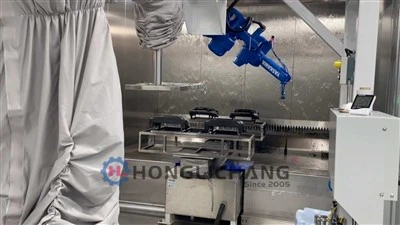
Let’s start with the foundation, and it’s not the paint itself—wait, yes it is, but not just any paint. When a shop takes in a car, the first thing they do is match the factory color code. Most people don’t know that every mass-produced car has a tiny sticker, usually on the driver’s side door jamb, stamped with a 3- to 8-digit code that tells manufacturers exactly what blend went into that exact car. But old classics? They don’t have that. So right off the bat, we supply shops with portable spectrophotometers that aren’t like the home ones you can buy online. A shop tech runs this tool over the faded fender of a 1967 Mustang, and in 10 seconds, it captures data on not just red, blue, or green hues, but also the size of aluminum flakes in the metallic coat, the depth of the clear coat, and even how the color shifts in shade—something called “flop” that you can see when you walk around a car. I remember a shop in Detroit that used to mix classic Mustang reds by eye; now, they can pull a 1968 Mustang’s factory specs from our database, punch it into the spectrophotometer, and get a exact mix recipe. No more guessing if the faded original’s discoloration was from sun or age—this tool measures the actual pigment, not what the human eye picks up.
Once the color is coded, the next step is mixing, and this is where I’ve seen the biggest shift in the last five years. A decade ago, shops used manual mixers with hand-held scales; a tech would pour base coat cans into a cup, add thinner, and stir by hand. One misplaced gram of pigment could throw off the entire blend. Now, we supply automated mixing systems that are calibrated daily, not just weekly. These systems use the spectrophotometer’s recipe to dose each pigment, clear coat, and hardener with precision down to 0.01 grams. I visit a shop in Cleveland every month, and their lead mixer showed me his old logbook from 2018—pages of notes about how his hand mixer’s paddle wore down, how he’d spill a gram of silver flake on the floor, how he’d have to waste a whole test panel when his mix was off by too much. Now, he doesn’t touch the pigment cans by hand; the automated system pumps each component through a sealed line straight from our bulk storage tanks. The only thing he does is verify the digital recipe against the spectrophotometer’s numbers once, before it starts. That eliminates human error from the mixing stage entirely—no more tired hands, no more miscalculations from writing notes wrong on a scrap of paper.
But here’s the part most people don’t talk about: the test panel. Even with the perfect recipe, every car’s environment changes the color. If you spray a test panel indoors under fluorescent lights, it will look different when you hold it next to the car in natural sunlight. Shops used to hang panels near their doors, but that meant variable light—one day it’s overcast, the next it’s bright sun. We solved that with standardized light booths. These booths aren’t just big boxes with bulbs; they have specific light temperatures—6500K, the same as noon sunlight at the equator—with no harsh shadows and no color distortion. A tech will spray a small test panel, let it dry, then slide it next to the car’s damaged fender inside the booth, and the spectrophotometer will scan both. If there’s a 0.5% difference in blue hue, the automated system will tweak the recipe in real time, adding a tiny amount of blue pigment to the mix. I once had a shop owner tell me that before light booths, he’d have to repaint a car three times before it matched. Now, he does one test panel, fixes the mix once, and the job is done. That’s a 60% drop in rework, he told me, and that’s money back in his pocket.
Wait, but what about the paint shop’s prep work? That’s a variable that trips even the most experienced teams. If a fender isn’t sanded properly, or has leftover wax from a previous detail job, the paint will sit on top instead of bonding, and the color will look flat. We supply shops with surface preparation kits that include pH meters to test for wax or oil, and specialized sanding pads that leave a consistent texture—no too-smooth spots where paint will run, no too-rough spots where pigment will clump. A shop in Chicago had a problem last year where their red paint kept looking blotchy on truck hoods. It turned out their old sanding pads were leaving micro-scratches that trapped air bubbles, which made the pigment deposit unevenly. We switched them to our micro-abrasive pads, and within a week, their blotch rate went to zero. That’s not just about the paint—it’s about making sure the surface is ready to hold the exact color mix we supply.
Another thing: bulk storage. I’ve seen shops store pigment cans in dusty basements, where temperature and humidity fluctuate. Humidity alone can change the pigment’s consistency—too much moisture will clump metallic flakes, making them look dull. So we supply climate-controlled storage cabinets that keep pigment at a constant 68 degrees and 45% humidity. Every month, our service team calibrates these cabinets, and we test a sample of each pigment batch before it’s sent to the shop. Last year, a shop in Pittsburgh thought they had a bad batch of silver flake. They sent us a sample, and we tested it in our lab—turns out their storage cabinet had a broken humidifier, so the flake was absorbing moisture from the air, which made it stick together, leading to uneven color. We fixed their cabinet, and their silver jobs matched perfectly after that. It’s not just about delivering the paint; it’s about making sure it stays consistent until it’s used.
And then there’s the final spray, which is where even the perfect mix can go wrong if the spray gun is bad. We supply shops with HVLP (High Volume Low Pressure) spray guns that are calibrated to a specific pressure—usually 10 PSI for base coat, 30 PSI for clear coat. Too much pressure, and the paint atomizes into tiny droplets that look flat; too little, and it runs, leaving thick spots that are darker. A tech in St. Louis told me that before he started using our calibrated guns, he’d have to adjust the pressure halfway through a job because his old gun’s nozzle was worn. Now, he uses a pressure regulator that’s synced to the automated mixing system—when the recipe calls for a certain amount of thinner, the pressure adjusts automatically. That consistency in spray means every part of the car gets the same amount of pigment, so the color doesn’t look different on the door vs. the fender.
I know a lot of people think that automotive paint accuracy is all about fancy technology, but it’s also about people. The shops that work with us don’t just plug numbers into a machine and walk away—their techs are trained to notice the things the spectrophotometer can’t, like a faint shift in hue when the car is parked under streetlights, or a metallic flake that looks too bright in certain angles. Last year, a shop in Detroit had a customer who brought in a 2021 Tesla Model 3 that had been in a fender bender. The spectrophotometer matched the code, the mix was perfect, but the lead tech noticed that the new paint looked a touch warmer than the original. He didn’t just rely on the machine—he went back to our database, found a older version of the same model’s color code (Tesla tweak their paints every six months), and adjusted the mix by adding a tiny bit of yellow pigment. The customer came back a week later, and said no one could tell which fender had been repainted. That’s the sweet spot: when technology takes care of the small, measurable variables, and the human eye takes care of the nuance.
Over the years, I’ve had shops tell me that color accuracy is the difference between a repeat customer and a bad Google review. I’ve seen a shop in Indianapolis lose a $10,000 contract with a local dealership because three cars’ paint didn’t match, and gain it back six months later when they upgraded their equipment with our products. The math is simple: a shop that gets color right on the first try spends less on rework, less time on each job, and more time taking on new work. That’s why I show up to their shop every quarter, not just to drop off supplies, but to do on-site calibrations, answer questions about the mix ratios, and watch their techs work. I remember when I was new in this industry, I’d feel like my job was just selling paint. Now, I know my job is part of a system that makes a car look like it never got damaged in the first place.

If you’re an automotive paint shop owner or manager tired of rework, inconsistent color matches, and lost customer trust, let’s connect to talk through how our tools, training, and bulk supply solutions can streamline your color accuracy process.
Exterior Parts References:
- Society of Automotive Engineers (SAE) International. “Color Measurement and Quality Control for Automotive Refinishing.” SAE International Journal of Materials and Manufacturing, 2021.
- Automotive Service Association (ASA). “2022 Automotive Paint Shop Efficiency Report.” ASA, 2022.
- American Paint and Coatings Association (APCA). “Best Practices for Automotive Refinish Color Matching.” APCA, 2020.
- International Organization for Standardization (ISO). “ISO 12647-2: Graphic Technology – Process Control for Production of Process Colour and Grey-Scale Separations and Proofs – Part 2: Offset Lithographic Prints.” ISO, 2019.
Shenzhen Honglichang Machinery Manufacturing Co., Ltd.
We are one of the most professional automotive paint shop manufacturers and suppliers in China, also support customized service. Please feel free to buy advanced automotive paint shop for sale here from our factory. Welcome to contact us for quotation.
Address: No. A802, Building 2, Tianan Digital Plaza, Longgang, Shenzhen, China
E-mail: victor@honglichang.com
WebSite: https://www.honglichang-paint.com/
