Hey everyone, quick heads up before we dive in – I’m the guy at [your company] that’s been hooking up playgrounds with barrier mesh for years. You’ve probably seen those stretchy, safety-focused fences around kids’ play areas and thought, “Wait, why does that look different from the random netting at my old neighborhood park?” Today we’re breaking down the real, non-negotiable requirements for using barrier mesh in a playground, from stuff you might not even think about as a park manager or parent looking to upgrade. Let’s get into it. Barrier Mesh
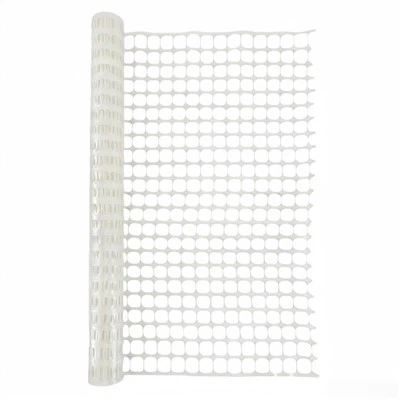
First off, let’s cut through the fluff: barrier mesh isn’t just any net. It’s purpose-built to stop kids from wandering out of designated play zones, keep balls from flying onto sidewalks or streets, and act as a soft buffer when little ones tumble against it. But if you slap up the first roll of mesh you find online, you’re asking for trouble – this isn’t a “one size fits all” product, especially when you’re dealing with stuff that keeps 3-year-olds safe.
Let’s start with the core material requirements, because this is where most people mess up. Playground barrier mesh can’t be flimsy, right? First, it needs to be UV-stabilized. Think about it: your playground is outside 24/7, rain or shine, snow or 90-degree heat. Regular plastic or low-grade nylon mesh will get brittle in a year or two, crack, and turn into sharp little pieces that can cut a kid’s finger. We use UV-inhibiting polyethylene (PE) for 90% of our playground mesh, and that’s non-negotiable. We test ours to last 5+ years in direct sunlight – no more replacing your fence every summer. Also, it has to be non-toxic. Kids will chew on it, sit on it, maybe even rub their eyes after touching it, so no heavy metals or phthalates. All our mesh passes the same ASTM toy safety standards for materials, which is a big deal – don’t skip that test, okay?
Next, the mesh size is make or break. This isn’t just a random number – it’s about how big a kid’s head or body can fit through. If your mesh holes are too big, a 4-year-old’s head can get stuck, and that’s a total nightmare. The standard we follow for playgrounds is a hole size no larger than 2 inches (5cm) in any direction. Wait, why not smaller? Because you need air flow, and if it’s too tight, it can get heavy when it’s wet, and also, bigger holes keep the mesh flexible. We did a test once with a customer who tried to use 1-inch holes because they thought it was safer – but when it rained, the mesh sagged so much it created a triangle shape, and a kid could slip right through the bottom. So 2 inches is the sweet spot: small enough to prevent head entrapment, big enough to stay functional in the weather.
Then there’s the tension and installation hardware – this is where so many installations go wrong. You can buy the best mesh in the world, but if you staple it to a flimsy wooden post or leave it loose, it’s useless. Playground barrier mesh needs to be taut, but not so tight that it’s like a drum – that can cause injury if a kid runs into it full speed. We recommend a 10-15% tension when installing, so it’s firm enough to stop a ball but gives a little when a kid falls. The hardware matters too: no rusty nails or cheap zip ties. You need stainless steel or galvanized steel posts, at least 2 inches in diameter for residential playgrounds, 3 inches for public parks that get heavy use. And the ties? We use heavy-duty polypropylene ties that can hold up to 100 pounds of pull – cheap zip ties will break in a year, especially if they’re exposed to sun. Also, don’t forget the bottom edge! A lot of parks skip securing the mesh to the ground, so a curious toddler can crawl under it. We always suggest burying the bottom 6 inches of mesh or weighting it down with concrete blocks – that extra step is what keeps kids from slipping out.
Now, age-specific requirements – this is a big one that’s often overlooked. A playground for toddlers (2-5 years old) needs way different barrier mesh than a playground for older kids (6-12 years old). Toddlers are smaller, more likely to crawl through gaps, and they don’t have the impulse control to stop at a fence. For toddler zones, we recommend a shorter barrier – 4 feet tall minimum – because taller than that, little kids can’t see over, which might make them scared to play. Also, for toddler areas, the mesh needs to have a little “give” – not super stiff, so if they bump into it, it’s soft. For older kids, who are bigger and might try to climb the fence to chase a ball, you need a taller barrier – 6 feet minimum – and sturdier mesh. We also make a heavy-duty version for middle school playgrounds that can handle 150 pounds of pull, because teens aren’t as gentle. Oh, and if you have a combined playground, you might need two layers: a lower one for toddlers and an upper one for older kids to keep balls from flying over. We did a project at a community rec center that did this, and they haven’t had a ball go onto the street in 3 years – total win.
Safety certifications are non-negotiable here, guys. You can’t just say “this is safe” – you need proof. The main standards in the US are ASTM F1148, which is specifically for playground equipment safety, and EN 15198 if you’re in Europe. These tests check everything from material strength to hole size to entrapment risk. We have all our mesh tested annually by a third-party lab, and we make sure to share the certificates with every customer. If a vendor can’t show you a copy of that certification, run – don’t buy their mesh. Also, check for compliance with the CPSC (Consumer Product Safety Commission) guidelines for public playgrounds – that’s the law for most local park districts, so skip this step and you might not get approved for installation.
Wait, let’s talk about use case-specific tweaks too. Is your barrier going around a play structure’s rooftop slide? That’s a different scenario than a perimeter fence around a whole playground. For rooftop areas, you need mesh that’s tear-resistant – we use a double-stitched version for these, because kids are often running and jumping, and a single tear becomes a big gap. If your playground is near a busy road, you might need a thicker mesh, 150 GSM (grams per square meter) minimum, to stop even hard-thrown baseballs or soccer balls. If it’s in a windy area (like a hilltop park), you need to make sure the mesh is UV-stabilized extra-tough, because wind can flutter brittle mesh and cause tears faster. We have a “wind-resistant” line that’s woven tighter, which we recommend for those areas – we installed that at a park on a ridge, and after two big storms, not a single tear.
Now, common mistakes I see people make all the time – let’s call these out, so you don’t mess up. First, buying cheap mesh online. I’m not saying all cheap mesh is bad, but the stuff you see on Amazon for $20 a roll is usually not UV-stabilized, has big holes, and will crack in 6 months. A lot of park managers go that route to save money, but end up paying twice as much to replace it. Second, not maintaining it. Mesh isn’t “set it and forget it.” You should check it once a quarter for tears, frayed edges, or loose ties. A small tear can turn into a big gap where a kid can slip through, so fix that right away. Third, installing it too low. A 3-foot tall barrier is enough for a back yard with your own kid, but a public playground needs at least 4 feet for toddlers, 6 feet for older kids. We had a customer who put up a 3.5-foot fence and within a month, a 7-year-old climbed over it and ran into the street – thank god no one was hurt, but that was a huge lesson for them.
Another thing: visibility. Playground barrier mesh shouldn’t block the view of the play area – parents need to see their kids at all times! That’s why we make our mesh clear, not dark green or black. Clear mesh lets you see through it, so parents can supervise easily, and it’s also less likely to make kids feel enclosed. We had a customer who tried a dark mesh because they thought it was “more durable,” but within a week, parents were complaining they couldn’t see their toddlers, so they had to replace it. Lesson learned: clear is better for visibility and safety.
Wait, what about installation gaps? If you’re attaching mesh to posts, you can’t leave big gaps between the mesh and the post, right? That’s a tripping hazard or a place where a kid’s hand can get stuck. We recommend using edge bands on the mesh to secure it tight to the posts, so there’s no space. For the corners, use reinforced corner pieces that are sturdier than regular mesh – corners are where most tears happen because the mesh is pulled in two directions, so reinforcing them is a must.
Now, let’s wrap this up for you. If you’re a park manager, a school facilities coordinator, or a parent who wants to upgrade their back yard playground, here’s your quick checklist for barrier mesh:
- Material: UV-stabilized PE, non-toxic, passes ASTM/EN safety tests
- Hole size: Max 2 inches, no bigger – no exceptions
- Tension: 10-15% taut, not too tight, with heavy-duty galvanized posts and ties
- Height: 4ft for toddlers, 6ft for older kids; add 6in ground anchoring
- Use case: Tear-resistant for rooftop, heavy-duty for busy roads, wind-resistant for hilltops
- Maintenance: Check quarterly for tears/loose parts, fix small issues fast
At the end of the day, barrier mesh is just another piece of playground safety equipment, but it’s one that’s often cut corners on. We’ve installed thousands of rolls over the years, and the projects that last longest are the ones that follow these requirements. If you’re looking to upgrade your playground’s safety, or have questions about what mesh is right for your space, hit us up to chat through your needs – we can share specs, safety certificates, and even help you figure out the right installation steps. Don’t wait until a small tear turns into a safety issue – reach out today to get your project on track.
Snow Fence References
- ASTM International. (2023). Standard Consumer Safety Specification for Playground Equipment for Public Use (ASTM F1148).
- European Committee for Standardization. (2022). Safety of Playground Equipment and Surfacing Material (EN 15198).
- U.S. Consumer Product Safety Commission. (2021). Public Playground Safety Handbook.
Shaoxing Yongte Plastics Co., Ltd.
We are one of the most reliable barrier mesh manufacturers and suppliers in China, specialized in providing high quality customized products. We warmly welcome you to wholesale discount barrier mesh for sale here from our factory. Contact us for pricelist and free sample.
Address: INDUSTRIAL PARK, LIZHU TOWN, KEQIAO DISTRICT, SHAOXING CITY, ZHEJIANG PROVINCE
E-mail: support@sxxyongte.com.cn
WebSite: https://www.fenceplastic.com/
