As a supplier of refractory castables, I’ve witnessed firsthand the profound impact that the composition of these materials has on their performance. Refractory castables are crucial in various high – temperature industries such as steelmaking, cement production, and glass manufacturing. Understanding how different components influence their properties is essential for both producers and end – users. Refractory Castable
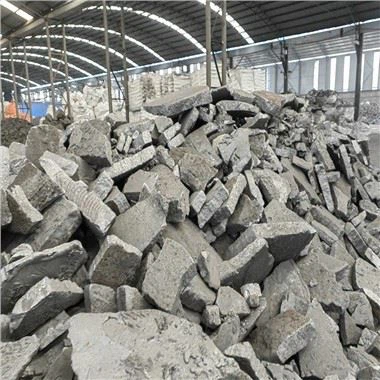
Aggregates: The Foundation of Refractory Castables
The aggregates used in refractory castables are the backbone of the material. They typically make up a significant portion, often around 60 – 80% of the total composition. Aggregates come in different types, including alumina, silica, magnesia, and zirconia, each with its unique characteristics.
Alumina aggregates are widely used due to their high melting point, excellent thermal shock resistance, and good chemical stability. They can withstand extremely high temperatures, making them suitable for applications in steel ladles and blast furnace linings. For example, in a steel – making process where temperatures can reach over 1600°C, alumina – based refractory castables provide reliable protection. The size and shape of alumina aggregates also play a role. Coarser aggregates can enhance the overall strength of the castable, while finer ones improve the packing density and reduce porosity.
Silica aggregates, on the other hand, are known for their low thermal conductivity. This property makes silica – containing refractory castables ideal for applications where heat insulation is required, such as in the walls of some industrial furnaces. However, silica has a relatively lower melting point compared to alumina, so it may not be suitable for the highest – temperature environments.
Magnesia aggregates offer high basicity and excellent resistance to basic slags. In the cement industry, where basic slags are commonly encountered, magnesia – based refractory castables are often used in kiln linings. They can withstand the corrosive effects of the slags and provide long – term durability under harsh conditions.
Zirconia aggregates are valued for their exceptional high – temperature stability and resistance to thermal shock and chemical corrosion. They are often used in specialized applications, such as in the lining of glass – melting furnaces, where they can withstand the aggressive environment created by molten glass.
Binders: Holding It All Together
Binders are another critical component of refractory castables. They are responsible for holding the aggregates together during the forming and curing process and providing initial strength to the castable. There are several types of binders, including hydraulic binders, chemical binders, and organic binders.
Hydraulic binders, such as calcium aluminate cement, are widely used. They react with water to form a hardened structure. Calcium aluminate cement provides good early – age strength and can be used in various refractory castable formulations. The amount of cement in the composition affects the setting time, strength development, and thermal properties of the castable. A higher cement content generally leads to faster setting and higher early – age strength but may also increase the porosity and reduce the high – temperature performance due to the formation of low – melting phases.
Chemical binders, like phosphates and silicates, offer excellent bonding capabilities at high temperatures. Phosphates can form strong chemical bonds with the aggregates, providing good strength and corrosion resistance at elevated temperatures. They are often used in applications where high – temperature strength and resistance to acidic slags are required.
Organic binders, such as resins, are used in some cases where a temporary binder is needed or where a specific property, such as low – temperature flexibility, is desired. Organic binders burn off during the initial heating process, leaving behind a porous structure that can improve thermal shock resistance.
Additives: Tailoring the Performance
Additives are used in small amounts to modify specific properties of refractory castables. They can greatly affect the workability, setting time, strength, and thermal stability of the castable.
Dispersants are commonly used to improve the workability of refractory castables. They reduce the surface tension between the particles, allowing for better flow and packing. This results in a more homogeneous mix and easier placement during installation. For example, in a large – scale furnace lining project, a well – dispersed castable can be more efficiently pumped and placed, reducing labor costs and installation time.
Set retarders and accelerators are used to control the setting time of the castable. In hot environments, set retarders can be added to prevent the castable from setting too quickly, giving workers enough time to complete the installation. Conversely, in cold environments or when a faster turnaround is needed, set accelerators can be used to speed up the setting process.
Fibers are another important type of additive. They can improve the thermal shock resistance and mechanical strength of the castable. Ceramic fibers, for example, can be added to the castable to form a reinforcement network. This network helps to prevent the propagation of cracks and enhances the overall durability of the castable, especially in applications where it is subjected to rapid temperature changes.
Influence on Key Performance Indicators
Thermal Resistance
The composition of refractory castables has a direct impact on their thermal resistance. As mentioned earlier, the choice of aggregates with high melting points, such as alumina and zirconia, is crucial for withstanding high temperatures. The binder also plays a role. Some binders may form low – melting phases at high temperatures, which can reduce the thermal resistance of the castable. By carefully selecting the aggregates and binders and optimizing their proportions, the thermal resistance of the castable can be maximized.
Chemical Resistance
Chemical resistance is essential in industries where the refractory castable comes into contact with corrosive substances such as slags, acids, and alkalis. The choice of aggregates and binders can determine the chemical resistance of the castable. For example, magnesia – based castables are highly resistant to basic slags, while silica – free or low – silica castables can offer better resistance to acidic environments. Additives can also be used to improve the chemical resistance. For instance, some additives can form a protective layer on the surface of the castable, reducing the penetration of corrosive agents.
Thermal Shock Resistance
Thermal shock resistance is the ability of the castable to withstand rapid temperature changes without cracking or spalling. Aggregates with low thermal expansion coefficients, such as some types of alumina, can contribute to better thermal shock resistance. Fibers and organic binders can also help by absorbing the stress generated during temperature changes. Additionally, the porosity of the castable can affect its thermal shock resistance. A certain level of controlled porosity can act as a buffer, reducing the internal stress caused by thermal expansion and contraction.
Conclusion
In conclusion, the composition of refractory castables is a complex interplay of aggregates, binders, and additives. Each component has a specific role in determining the performance of the castable in terms of thermal resistance, chemical resistance, and thermal shock resistance. As a supplier of refractory castables, I understand the importance of customizing the composition to meet the specific needs of different industries and applications.

If you are in need of high – quality refractory castables for your industrial processes, I invite you to contact me for a detailed discussion. We can work together to develop a refractory castable solution that is tailored to your exact requirements and ensures optimal performance and long – term durability.
Ladle Refractory Material References
- "Refractories Handbook" by Peter J. F. Harris
- "High – Temperature Materials and Technologies" edited by R. Vassen and D. Stover
- "Thermal and Mechanical Properties of Refractory Materials" by A. G. Evans and J. R. Porter
ZhenAn International Co., Limited
ZhenAn International Co., Limited is one of the leading refractory castable manufacturers and suppliers in China. We warmly welcome you to wholesale discount refractory castable in stock here from our factory. All our products are with high quality and competitive price.
Address: Huafu Commercial Center, Wenfeng District, Anyang City, Henan Province, China
E-mail: info@zaferroalloy.com
WebSite: https://www.ferro-silicon-alloy.com/
