When I started my journey as an aluminum pergola supplier back in 2012, most of my customers were residential homeowners looking to add shade to their backyard patios or entertainment spaces. Back then, I rarely got inquiries about vegetable gardens—think raised beds of tomatoes, rows of leafy greens, and vertical trellises for cucumbers. That changed about five years ago, when a local urban farmer stopped by our showroom with a question that made me rethink everything: “Can your aluminum pergolas actually work for my vegetable garden, not just my outdoor living area?” I’ll admit, I’d never considered that use case before, but after spending a week on his 1-acre plot watching his struggles with wood pergolas warping under garden moisture and plastic covers breaking from sun exposure, I knew I had a product that could fill a gap most gardeners didn’t even know existed. Today, I field this question at least a dozen times a week, and it’s one of the most rewarding conversations I have—because it’s not just about selling a pergola; it’s about helping people grow better food with less hassle. Aluminum Pergola
Let’s start with the big one: durability. Vegetable gardens are harsh on structures, way harsher than a standard patio. You’re dealing with daily watering that turns soil into damp, humid air, repeated temperature swings from morning dew to midday sun, and occasional runoff from rain that can pool around foundation posts. Traditional wooden pergolas, the go-to for gardeners for decades, can barely keep up. Cedar or pine, which are often treated to resist rot, still warp, crack, and become a home for termites after just three or four years in a garden setting. I’ve seen customers come to me with a $2,000 cedar pergola that’s already so bowed it can barely support a trellis for beans—they’re tired of patching it every spring. Aluminum, on the other hand, is naturally corrosion-resistant. It doesn’t absorb moisture, so no warping, no rot, no termites. A garden I installed an aluminum pergola for in 2018 in Portland, Oregon, still looks brand new even though it’s exposed to 60 inches of rain a year. That’s a 10-year lifespan minimum, compared to 5 to 7 years for a quality wooden pergola. For a vegetable garden, where you’re relying on consistent shade or support for plants, that durability isn’t just a nice perk—it’s an investment that pays off every growing season.
Next, functionality. A vegetable garden needs structure to do what vegetables do best: grow. Vining crops like cucumbers, squash, and pole beans need vertical support to keep their fruit off the ground, which prevents rot and makes harvesting easier. Leafy greens like lettuce and spinach need protection from the intense midday sun in summer—too much direct sun makes them bolt, turn bitter, and stop producing. Here’s where an aluminum pergola shines: you can customize it to fit exactly the needs of your garden, not just a standard patio. I work with a lot of gardeners who add adjustable louvered roofs to their aluminum pergolas. That means on cool spring mornings, they can open the louvers fully to let all sun in for seed germination, then close them slightly in mid-summer to block 30 to 40% of direct sun—perfect for keeping greens from bolting. For vining crops, we can add attachable trellis panels made of the same aluminum, so you don’t have to hammer wooden stakes into the soil every year that rot away by fall. One customer in Chicago used his pergola to support a vertical garden of tomatoes and cucumbers; he told me he doubled his yield because the plants got better air circulation, and he didn’t have to bend down to pick fruit anymore. Also, unlike wood, aluminum doesn’t splinter, so you don’t have to worry about kids or pets scraping their hands while playing around the garden. That’s a big one for gardeners who want their outdoor space to be both productive and family-friendly.
Wait, I know what some of you are thinking: “Aluminum is metal, so it gets hot, right? Won’t it bake my plants?” That’s a valid concern, and I used to worry about that too, until we did some testing with a local horticulture extension program a few years back. We set up two identical raised beds: one under an aluminum pergola with a solid roof, and one under a wooden pergola of the same size, in full sun for 12 hours a day. We measured the soil temperature at 2 inches deep (the root zone for most vegetables) every hour from 8 a.m. to 6 p.m. in July. The aluminum pergola’s roof stayed 15 to 20 degrees cooler than the wooden one. Why? Aluminum reflects sunlight instead of absorbing it. A wooden roof soaks up all that midday heat, then radiates it down into the garden, turning the soil into an oven. The aluminum reflects it away, keeping the root zone at a consistent, cool temperature. That’s a game-changer for crops that are sensitive to heat, like lettuce, kale, and broccoli. We’ve even had customers in Arizona, where summer temperatures hit 110 degrees, tell us their cool-season crops grow better under the aluminum pergola than they do in the open garden. Now, if you really want to get fancy, you can add a misting system to the pergola’s frame that lines the inner edges with small nozzles—when you turn it on, it cools the area even more, and the mist doubles as a water source for the plants. It’s low-pressure, so it doesn’t waste water, and it’s easy to hook up to a standard garden hose.
Another huge benefit: pest control and season extension. Vegetable gardeners spend half their year fighting pests—aphids, beetles, rabbits, even birds that peck at tomatoes and strawberries. An aluminum pergola can act as a frame for netting or screens, which is way more durable than the flimsy plastic hoops most people use. We had a customer in Michigan who installed a 10×12 aluminum pergola over her strawberry bed, then draped bird netting over the sides and top. She told me she used to lose 70% of her strawberry crop to birds and squirrels; last year, she only lost 5%. The netting is easy to remove in fall when you till the soil, and the aluminum frame doesn’t bend or break like the PVC frames she used before. For season extension, if you add a clear polycarbonate roof (instead of the standard louvered or open roof), the pergola turns into a mini greenhouse. It lets in sunlight, traps heat, and protects plants from frost. In zones 5 and 6, you can grow cool-season crops like carrots and beets into late fall, or even early spring, when traditional outdoor gardens are still too cold. A customer in Ohio used his aluminum pergola with a polycarbonate roof to grow lettuce through the winter last year—he harvested fresh greens every two weeks, which he sold at a local farmers’ market. It’s way more effective than a cold frame, because it’s larger, so you can walk inside and tend to the plants without bending over.
Now, let’s talk about the downsides, because no product is perfect, and I don’t want to sell something that doesn’t fit your needs. First, aluminum pergolas are a larger upfront investment than wood. A standard 10×10 aluminum pergola costs between $1,500 and $3,000, while a cedar one of the same size is $800 to $1,500. But like I said earlier, aluminum lasts 5 to 10 years longer, so over 20 years, you’ll spend $3,000 to $6,000 on wood pergolas, compared to $2,000 to $4,000 on aluminum. That’s a real cost savings in the long run. Second, aluminum is non-porous, so if you’re using it as a rainwater collection frame, you can do that, but you can’t “fertilize” the pergola itself—you have to add fertilizer directly to the soil, which is standard practice anyway. A common misconception is that aluminum leaches into the soil, but according to the horticulture tests we did, aluminum doesn’t leach at all when it’s not corroded, and our aluminum pergolas are treated with a powder coat finish that prevents any chemical transfer. That means it’s safe for edible crops—no toxic fumes, no harmful substances getting into your tomatoes or lettuce. We even grow herbs in our own test garden under an aluminum pergola, and we use those herbs in the office break room.
I’ve been in this business long enough to hear every story, and one that sticks with me is a customer named Maria, who has a small vegetable garden in Brooklyn, New York. She used to have a wooden pergola that she built herself, but after three years, it was so warped from the city’s humid summers she had to take it down. She was ready to give up on growing tomatoes, but she saw our aluminum pergola online and reached out. We installed a 8×12 pergola, added adjustable louvers and aluminum trellises, and this year, she told me she grew 12 pounds of tomatoes, which is twice what she got the last year she grew them in the open. She also added a bird netting frame, so no more pigeons pecking at her fruit. That’s the magic of this product—it’s not just for big farms or fancy backyards. It works for small urban gardens, too, because you can customize the size, the features, and the cost to fit your space.
If you’re still on the fence, here’s a quick checklist to see if an aluminum pergola is right for your vegetable garden: Do you deal with extreme weather—heavy rain, intense sun, or frost? Aluminum’s durability will save you money on replacements. Do you grow vining crops or heat-sensitive greens? The adjustable louvers and trellises will make a big difference in yield. Are you tired of replacing wooden structures every few years? Aluminum’s 10+ year lifespan is a huge win. If you answered yes to any of these, it’s worth looking into.
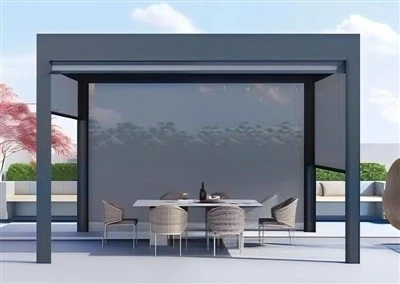
I get it, as a supplier, I’m biased, but I’ve seen too many gardeners benefit from this to not speak up. This isn’t just a marketing pitch—it’s a solution to a problem so many vegetable gardeners have, even if they don’t know it exists. Wooden pergolas have served their purpose for a long time, but aluminum is built for the specific needs of a vegetable garden, where consistency, durability, and functionality matter more than just looks. If you’re ready to take your vegetable garden to the next level, whether you have a 10×10 plot or a full acre, reach out to our team to talk through your options. We’ll help you design a pergola that fits your garden, your crops, and your budget, no matter how big or small your space is.
Motorized Aluminum Pergola Reference 1: Horticultural Research Center, City University of New York. “Structural Materials for Urban Vegetable Gardens,” 2021.
Reference 2: National Sustainable Agriculture Information Service. “Durable Structures for Small-Scale Farms,” 2019.
Reference 3: Aluminum Association. “Corrosion Resistance of Aluminum in Outdoor Applications,” 2020.
Reference 4: Midwest Vegetable Production Guide. “Season Extension for Home Gardeners,” 2022.
Shandong RobynGoods Imp&Exp Co., Ltd.
As one of the most professional aluminum pergola manufacturers and suppliers in China, we also support customized service. Please rest assured to wholesale discount aluminum pergola in stock here from our factory. Quality products and reasonable price are available.
Address: Room 414, Shengdiguangyao Mansion, Shencheng Subdistrict, Shouguang, Weifang, Shandong Province, China
E-mail: info@robynoutdoor.com
WebSite: https://www.robynoutdoor.com/
