If you’ve ever walked through a busy steel processing warehouse—where coils of cold rolled strips are stacked floor to ceiling, waiting to be cut, coated, or shipped to automotive, appliance, or construction manufacturers—you know how easy it is for parts to get mixed up. A single mix-up in grade, thickness, or heat number can throw off an entire production run, cost thousands in scrap, and even delay a customer’s launch date. That’s why, after 12 years as a cold rolled strips supplier, I’ve seen first-hand how the right marking method isn’t just a label—it’s a critical part of quality control. Over the years, I’ve tested almost every common marking process, talked to our customers about what works for their lines, and worked through the kinks that come with each system. Today, I want to break down the most reliable marking methods for cold rolled strips, how they work, when to use them, and why some have stood the test of time better than others. Cold Rolled Strips

Let’s start with the basics: what makes a good marking for cold rolled strips? It has to be permanent enough to survive the entire supply chain—from our mill floor, through logistics, the customer’s receiving dock, and even through their own processing steps like pickling, annealing, or forming. It can’t flake off when strips are uncoiled, smeared when stacked, or wear away when exposed to moisture or harsh factory conditions. And it has to be readable, even from a distance on a stacked coil or a long strip being fed into a press. Not all methods check all those boxes, which is why matching the marking to your specific application is key.
First on the list is stencil spraying, the oldest and still most widely used method in our industry. Here’s how it works: we make a custom-cut stencil for each heat or coil, place it on the flat edge of the strip (or the end face of the coil), and spray a high-adhesion, heat-resistant ink through the cut-outs. For years, this was the only cost-effective way to mark large runs of strips. The benefits are hard to ignore: it’s fast for high-volume orders, it works on all types of cold rolled steel—from low-carbon to high-strength grades—and it’s cheap, especially for small batches where custom labeling would be overkill. That said, it’s not without flaws. Spray stencils can smudge if the ink isn’t allowed to dry fully, especially in humid warehouses. We once had a customer in the appliance industry receive a shipment where a few coil labels smeared during transit, leading them to mix up a batch of draw-quality strips with standard grade. That mistake cost them two days of production, and us a lot of trust. We fixed that by switching to fast-dry, UV-stabilized ink for all our spray marks, and we now use a secondary label on the coil’s core for backup. But even with those tweaks, stencil spraying isn’t ideal for customers who need highly precise, unique markings per part—only per coil or heat. If you’re cutting a 2,000-foot coil into 10 separate blanks, stencil spraying only marks the coil end, not each individual blank. That’s where laser marking comes in.
Laser marking has been a game-changer for our industry over the last 15 years, and it’s now the first method we recommend to customers with strict traceability requirements. Instead of ink or stencils, a high-powered fiber laser etches directly into the surface of the cold rolled strip, creating a permanent, code-like mark that’s impossible to smudge or peel off. The process is precise enough to mark anything from simple heat numbers and grades to unique serialized codes, QR codes, or even custom customer logos. The benefits here are two-fold: first, the mark is 100% permanent—we’ve run test strips through annealing furnaces at 1,500 degrees Fahrenheit, pickle lines with strong acid, and even heavy stamping presses, and the laser mark is still fully readable. Second, it’s completely customizable. If a customer needs each blank from a single coil to have a unique serial number for quality tracking, we can set up our laser machines to do that in seconds, no extra stencils or ink required. We work with a major automotive parts maker that requires every component they produce to have a traceable mark back to the exact mill heat. When we switched them from spray marking to laser marking, they cut their traceability errors by 98% in the first six months. That’s the kind of impact laser marking can have. It’s not perfect, though—there’s a higher upfront cost for the laser equipment, and it works best on clean, mill-scale-free surfaces. We’ve had cases where a thin layer of mill scale on a strip caused the laser mark to be faint, so we now make sure all laser-marked strips are thoroughly cleaned before processing. Also, for very thin cold rolled strips (under 0.2mm), the laser can leave a slight indentation that some customers object to, even though it doesn’t affect performance. It’s a small trade-off, but one we weigh carefully for each order.
Next, there’s inkjet printing, often split into two types: continuous inkjet (CIJ) and thermal inkjet (TIJ). CIJ is the most common of the two for industrial use. It works by shooting a continuous stream of tiny ink droplets, deflecting them to form letters and numbers as the strip moves past the printer head. CIJ is fast, can mark at line speeds up to 600 feet per minute, and can mark very small, detailed text. It’s also more flexible than stencil spraying—you can change markings on the fly without swapping stencils. That makes it popular for customers who run multiple small orders on the same line, since they don’t have to pause to cut new stencils. TIJ, on the other hand, uses heat to vaporize ink droplets, which are then shot onto the surface. It’s even more precise, ideal for high-resolution QR codes or 2D data matrices. The downsides of inkjet, though, are durability. Even the best industrial inks can wear off if the strip is exposed to heavy handling, oil, or high heat. We had a customer in the construction industry use inkjet-marked strips for roofing panels, and after the panels were coated with a protective layer, some of the ink washed off during the coating process. They had to re-mark every panel at their facility, which added weeks to their timeline. Another issue with inkjet is that it can smudge if the strip is rolled up immediately after printing—we now require a 10-minute drying time for all inkjet-marked strips before they’re coiled, which adds a small amount of time to our production process, but prevents most issues.
Then there are mechanical marking methods, like pin stamping and embossing. Pin stamping uses a set of small, sharp pins to punch numbers and letters into the surface of the strip, creating a raised or indented mark. Embossing uses pressure to press a design or code into the strip, leaving a permanent, raised mark. These methods are almost indestructible—they survive the harshest processing steps, including heavy forming, welding, and even high-heat applications. They don’t require any ink or special equipment beyond the stamping tool, which makes them low-cost for very large batches where permanence is non-negotiable. But they have major downsides for thin or high-precision strips. Pin stamping can leave sharp edges or burrs on thin strips (under 0.5mm), which can cause issues during forming or scratch other parts. Embossing, meanwhile, can distort the shape of the strip, especially for narrow strips used in electrical components. We only use mechanical marking for large, thick strips (1mm and up) used in heavy construction or structural steel applications, where durability is the top priority and minor distortion isn’t a problem. We once used pin stamping for a customer that needed strips for bridge beams, and the marks still readable after 10 years of being exposed to rain, snow, and road salt. For high-precision parts, though, it’s a non-starter.
Over the last few years, a newer method has started to gain traction: digital marking, which combines laser technology with data matrix codes to create fully traceable, scannable marks. This is a step beyond basic laser marking, as it lets us store all the data about a strip—heat number, chemical composition, production date, even the mill operator’s name—in a 2D code that can be scanned at any point in the supply chain. We work with a medical device manufacturer that uses these codes to track every cold rolled strip that goes into their surgical tools. When they get a batch from us, they scan the code and have full visibility into every step of production, from the original steel mill to our processing line, and every quality test that was run. That level of traceability has become non-negotiable for many of our customers in regulated industries, like medical devices and aerospace, and digital marking has become our go-to for those orders. The only downside is that it requires scannable equipment on the customer’s end, which is an investment, but most large manufacturers already have that in place for quality control.
After 12 years in this business, I can tell you that there’s no one “best” marking method for cold rolled strips—it all depends on what the customer needs. If you’re a small fabricator working with low-volume, low-traceability parts, stencil spraying or even inkjet will work fine. If you’re a major automaker needing full traceability for every component, laser marking or digital marking is non-negotiable. If you’re building heavy structural parts that will be buried or exposed to extreme conditions, mechanical marking is the way to go. I’ve seen too many customers choose a marking method based on cost alone, only to end up paying more in the long run when marks wear off, errors happen, or production delays hit. That’s why we don’t just send a shipment with a mark—we work with each customer to figure out what their needs are, test a small sample, and find the right balance of cost, durability, and readability.
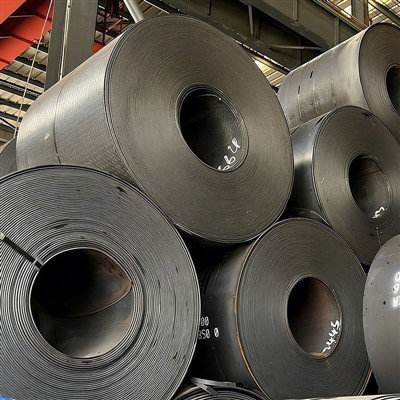
At the end of the day, marking is a small part of the entire cold rolled strip process, but it’s the part that keeps everything connected. It’s how a part gets traced back to the mill, how errors are caught before they become costly mistakes, and how supply chains run smoothly. For us, as a supplier, it’s not just about delivering steel—it’s about delivering peace of mind that our parts can be tracked, verified, and used without hiccups. If you’re in the market for cold rolled strips and want to talk about the best marking method for your application, I’m here to help. We’ve worked with every type of customer, from small local fabricators to large multinational manufacturers, and we can customize a marking solution that fits your exact needs. Don’t let a bad mark derail your next production run—reach out to our team today to discuss your requirements.
Hot Rolled Steel Plates References
- Cold Rolled Steel Processing and Quality Control. Steel Manufacturers Association, 2021.
- Industrial Marking Technologies for Metal Components. Society of Manufacturing Engineers, 2019.
- Traceability Standards for Automotive and Aerospace Components. International Organization for Standardization, 2020.
- Durability Testing of Metal Marking Methods. Journal of Industrial Materials Science, vol. 12, no. 3, 2018, pp. 45-62.
Kennen Steel International Co., Ltd.
Address: No. 10, South Road, Area C2, Lecong Iron & Steel World, Shunde District, Foshan City, Guangdong Province
E-mail: info@kennensteelco.com
WebSite: https://www.kennensteelco.com/
