If you’ve ever held a car part with a shiny, mirror-like finish, a bathroom faucet that catches the light just right, or a decorative piece that looks polished enough to last a decade, you’ve interacted with the work of plating services. For over 12 years, my team and I have run a plating operation focused on one core promise: consistency. Clients don’t just want their parts to look good—they want that perfect, smooth plating surface that holds up against rust, wear, and everyday use. Over the years, I’ve learned that smoothness isn’t just a cosmetic afterthought; it’s the foundation of a plating job that works as well as it looks. Plating Services
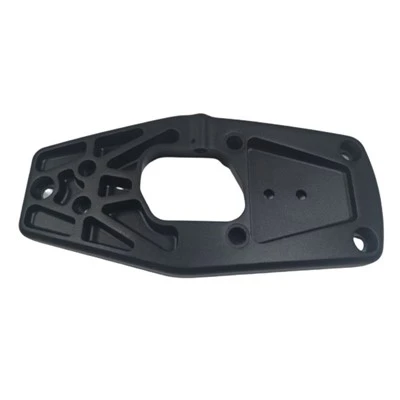
Let’s start with the part most people don’t see: the base metal. No matter how high-end your final plating material is, a rough, porous, or uneven base will always show through. Early in my career, I took a part from a client that had come in with what looked like minor surface scratches left from a machining process. I thought a quick pre-clean and a thin layer of nickel would fix it—big mistake. When we finished, the scratches were still there, visible under the final chrome, and the client sent it back. That taught me the first rule of smooth plating: you can’t polish a bad base.
Our first step is always a multi-stage pre-treatment process tailored to the base metal. If we’re working with steel, we start with alkaline cleaning to remove oils, coolants, and machining residues that get trapped in even tiny surface pits. For aluminum, which is more prone to oxidation, we use a deoxidizing dip followed by a light acid etch—nothing too aggressive, because aluminum etches fast and can get uneven if we’re not careful. But pre-cleaning isn’t just about removing gunk. We also use mechanical surface preparation for parts with more significant imperfections: vibratory tumbling for small, intricate components, and belt grinding with progressively finer grits for larger parts like automotive trim. Last month, we finished a run of 500 zinc die-cast door handles that had tiny flash lines from the casting process; we ran them through ceramic tumblers for three hours, and by the end, every handle had a uniform matte surface that would lay down a perfect plating layer.
Once the base is prepped, we move to the most critical stage for surface smoothness: electroplating chemistry and process control. I’ve seen too many platers cut corners here, either using old bath solutions or not monitoring parameters closely enough, and the results are never smooth. Our plating baths are custom-mixed for each job, with additives that level the surface as the metal deposits. Leveling agents are the unsung heroes of plating. They work by adsorbing more strongly to the peaks of a surface than the valleys, so metal builds up faster in the low spots, evening things out as the layer gets thicker. For our nickel and chrome plating lines, we test the bath’s pH, metal concentration, and additive levels every two hours, not once a day. A pH shift of just 0.2 can throw off leveling, leading to a bumpy surface or even pitting. Last winter, our main nickel bath drifted slightly because of a heater malfunction; we caught it within an hour, drained 10% of the bath, added fresh solution, and pulled all the parts that were in the bath to reprocess them. If we’d waited another four hours, that small shift would have cost us 200 parts and a week of delays.
We also pay close attention to current density, or the amount of electrical current flowing through the plating bath. Too much current, and metal deposits too fast, forming loose, grainy structures that look like fine sandpaper. Too little, and plating is uneven, especially on recessed areas of complex parts like valve bodies or medical device components. We use pulsed current for many of our precision jobs—instead of a constant flow, we pulse the current on and off at short intervals. This gives the hydrogen bubbles that form during plating time to escape, which is key to preventing pinholes and pitting. Hydrogen bubbles are tiny, but if they get trapped on the surface of the part while plating, they leave small indentations that ruin smoothness. Pulsed current reduces bubble entrapment by 70% for our small, hard-to-reach parts, and that’s a number we’ve verified through our own testing and independent quality audits.
Another trick we’ve developed over the years is intermediate plating layers. For parts that are especially prone to base metal imperfections, or for combinations of metals that don’t bond well, we add a thin, smooth interlayer before the final decorative plating. For example, when plating chrome onto zinc die-cast parts, zinc can leach into the chrome bath if we’re not careful, causing dull, rough spots. We add a 0.0005-inch layer of semi-bright nickel as an interlayer, which acts as a barrier and also has excellent leveling properties. This tiny layer might seem insignificant, but it’s made a huge difference in reducing reject rates for parts with complex shapes. Early in my business, our reject rate for chrome-plated door handles was 12%; with that interlayer, it’s down to less than 2%.
Even with all the care we put into pre-treatment and plating, we can’t ignore post-plating finishing. No plating layer comes out of the bath perfectly smooth, so mild polishing is our final step for decorative jobs. We use both mechanical polishing and chemical polishing, depending on the part. For flat parts like kitchen appliance panels, chemical polishing is ideal: a mild acid dip that etches the surface evenly, removing tiny grain structures and leaving a mirror finish without any risk of over-polishing. For parts with intricate curves, like bicycle handlebars, we use a soft buffing wheel with a fine rouge compound, applied by hand by our most experienced polishers. It might take a bit more time, and it’s not as fast as mechanical polishing, but it means we don’t scratch or distort the curved edges that are so important for smoothness and appearance.
Quality control is woven into every step of our process, not just a final check. We use a surface profilometer, a tool that measures tiny surface irregularities in microns, to test every batch of parts before they ship. Our standard for decorative plating is a surface roughness of less than 0.5 microns—for context, a human hair is about 50 microns thick, so that’s 100 times finer than a hair. We also test for adhesion, because a plating layer that peels will never look smooth for long. We do a cross-hatch adhesion test, cutting a grid into the plating layer and applying adhesive tape to see if any flakes off. If even a single flake comes off, we pull the batch. Last quarter, we had a client send us a batch of parts from another plater that had peeled after just three months. When we tested those parts, their surface roughness was over 2 microns—rough enough that the plating layer couldn’t adhere properly. That’s why we don’t cut corners on testing.
I’ll be honest: plating is a tricky business, and even with all these steps, we still have occasional small issues. A part that’s been stored wrong before it reaches us can develop oxidation that’s hard to remove, a sudden power outage can throw off plating uniformity, or a batch of incoming base metal can have unexpected porosity. But that’s where our experience comes in. When we do run into a problem, we don’t ship the part and hope the client doesn’t notice. We re-process it, adjust our process, and make sure it never happens again. That’s why many of our clients have been with us for 10, 15, even 20 years—they know we stand behind every part that leaves our shop.
If you’re a manufacturer, designer, or product owner working with parts that need a smooth, durable plating finish, you know that the quality of your plating can make or break your product. A smooth surface doesn’t just look better—it improves corrosion resistance, reduces friction for moving parts, and makes your product more reliable over time. The key to that smoothness is not magic—it’s attention to every tiny detail, from the base metal prep to the final polish, and rigorous quality control at every step.
I’ve been in this business long enough to know that trust is earned, not given. We don’t just talk about smooth plating surfaces—we deliver them, one part at a time. If you have a project coming up, whether it’s a small run of custom parts or a large production order, I’d welcome the chance to sit down with you, talk through your needs, and show you how our process can get you the smooth, high-quality plating finish your product deserves.
Powder Coating Services References
- Schlesinger, M., & Paunovic, M. (2010). Modern Electroplating (5th ed.). John Wiley & Sons.
- Kittel, C. (2005). Introduction to Solid State Physics (8th ed.). John Wiley & Sons.
- Jones, D. A. (1996). Principles and Prevention of Corrosion (2nd ed.). Prentice Hall.
- Walsh, F. C. (1993). A First Course in Electroplating. Institute of Metal Finishing.
- American Society for Testing and Materials (ASTM). (2017). Standard Test Method for Measuring Surface Roughness by Stylus Contact Instrument. ASTM B46-17.
Aqua Precision Machining Limited
As one of the most professional plating services suppliers and precision parts manufacturers in China, we’re featured by quality products and low price. With a professional production team, we are able to meet the needs of the majority of our customers. If you have any enquiry about quotation, please feel free to email us.
Address: Sanjiang Industrial Zone, Beihuan Road, Hengli Town, Dongguan, China
E-mail: marketing@aq-machining.com
WebSite: https://www.aq-machining.com/
