If you’re running a commercial space—think a busy gym, a high-traffic retail store, or a warehouse with constant foot traffic—you’ve probably stared at your current sole cleaning machine and thought, “Why do I have to refill the water tank every single hour?” I hear that question all the time, mostly from facility managers who are drowning in the tiny, inconvenient water reservoirs that most standard machines come with. And to cut to the chase: yes, there are sole cleaning machines with large-capacity water tanks—they’re a game-changer for anyone who doesn’t want to babysit their cleaning equipment all shift long. Sole Cleaning Machine
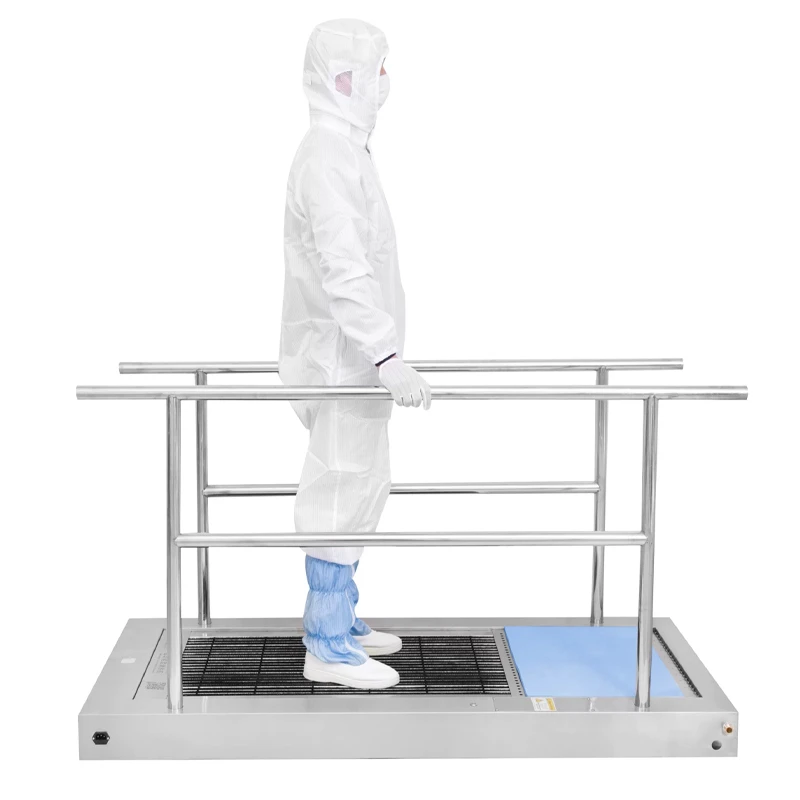
Let’s start with the basics, because a lot of folks don’t realize how much the water tank size actually impacts your daily workflow. A standard, entry-level sole cleaning machine (the kind you might see in a small office or a boutique shop) usually has a tank that holds 2 to 3 gallons of water. That’s fine if you’re only cleaning a few hundred pairs of shoes a day, but for a space that sees 1,000+ shoes pass through? You’re refilling that tank every 45 minutes to an hour. That’s not just a hassle—it’s downtime. If you’re a gym with 500 members coming and going, or a airport terminal where thousands of people are walking through the shoe sanitizer station, stopping to refill water every hour kills your momentum. That’s exactly where large-capacity models come in. Our line of machines, for example, has tanks that range from 5 to 8 gallons—some even go up to 10 gallons for the heavy-duty commercial setups. But here’s the thing: it’s not just about making the tank bigger. There’s a science to designing large tanks so they don’t make the machine bulky, heavy, or hard to move around.
Wait, let’s get into that science for a sec, because it’s not just “bigger = better.” If you cram a 10-gallon tank into a machine that’s supposed to sit at a shoe entrance, it’s going to be too wide, too heavy to wheel around, and maybe even a tripping hazard. So manufacturers (ours included) use materials like food-grade BPA-free plastic that’s lightweight but structurally rigid, and shape the tanks to fit the machine’s frame without taking up extra space. Some even split the tank into two compartments: one for clean water, one for dirty runoff. That’s smart, because you’re not pouring dirty water back into the clean side, and it also means you don’t have to empty the dirty tank as often either—another win for big spaces. We tested one of our 8-gallon models at a local warehouse that handles 1,200 work boots a day; they went 6 full shifts without refilling or emptying the tanks. That’s a huge difference from their old 3-gallon machine, which needed 3 refills a day.
Now, you might be wondering: is a large tank machine worth the extra cost? Let’s crunch the numbers, using a real example. Let’s say you’re a retail manager paying someone $15 an hour to monitor the shoe cleaning station. If they spend 2 hours a day refilling and emptying tanks, that’s $30 a day in wasted labor, or $900 a month. Our large-tank machines cut that refill time down to 15 minutes a day max. On top of that, less frequent refills mean less chance of spills or messy, half-empty buckets sloshing around—something I’ve seen way too many facilities deal with. Plus, these models usually have better filtration systems, so the dirty tank doesn’t get clogged as fast, which means fewer clogs and less maintenance. We’ve had customers tell us they saved almost $1,000 a month after switching to our large-capacity machines, just in labor and reduced maintenance costs. That’s not a small number.
But here’s a common misconception: not all large-capacity tanks are created equal. Some cheap knockoff machines out there have “big” tanks, but they don’t account for the water flow needed to actually clean soles effectively. If your tank holds 10 gallons, but the machine only sprays 1 oz of water a minute, that water will last forever—but it won’t do a good job of removing mud, dust, or rubber buildup from shoe soles. The best large-tank sole cleaning machines balance tank size with water output. Our machines, for example, have a variable spray system that lets you adjust the flow depending on how dirty the shoes are. For lightly soiled sneakers, the spray is low, so the water lasts longer. For muddy work boots, the spray is higher, and the large tank means you don’t have to refill mid-clean. That’s a balance a lot of budget machines miss, and that’s why it’s important to go with a supplier that actually tests their equipment in real commercial settings, not just labs.
I should also mention the other perks that come with large-tank machines, because they’re not just about water. A lot of these models have built-in drainage systems, so you can connect the dirty tank to a floor drain instead of having to carry buckets of water to a sink. That’s a massive help in warehouses, gyms, and airports where you don’t want to be hauling heavy water containers. Some even have automatic refill sensors—so when the clean water tank gets low, it triggers a warning light, and you can refill it during a lull in business, not in the middle of a busy rush. We added that sensor to our line a couple years back, and it’s been one of the most requested features from customers.
Wait, let’s talk about a time I had a customer who almost went with a cheap large-tank machine and regretted it. A local basketball gym came to me a year ago, saying they found a machine with a 12-gallon tank for half the price of ours. They bought it, and within a week, the tank started leaking because it was made of thin plastic. Also, the spray pressure was so low that after a month, they still had dirt on the soles of the players’ shoes, so they had to go back to wiping them down manually. They returned the cheap machine and got one of our 8-gallon models. Now, they go 5 days between refills, the spray is strong enough to get rid of grass and dirt, and they haven’t had a single leak. That’s why I always tell people: if a large-tank machine seems too good to be true, it probably is. The right large tank is paired with solid build quality, proper spray pressure, and easy maintenance.
Another thing: eco-friendliness. A lot of large-tank machines are actually more water-efficient than small ones, because you’re not wasting water refilling every hour. Think about it: if your small tank uses 1 gallon of water per hour of cleaning, and you’re refilling 8 times a day, that’s 8 gallons. Our large tank uses the same 1 gallon per hour, but you only refill once a day—so that’s 1 gallon less per day, and less water wasted from spills when you’re refilling multiple times. For facilities that care about reducing their water footprint (which most commercial spaces do now), that’s a big plus. We’ve had customers get certified for green building programs just by switching to our large-tank machines, because of their reduced water usage.
Now, you might be thinking, “But I have a small business—do I even need a large-tank machine?” If you’re a tiny boutique with only a few customers a day, a small 2-gallon tank is totally fine. But if your small business is a café with a shoe cleaning station for customers who walk in with dirty boots, or a daycare center where parents track in mud, you might be surprised. We had a small coffee shop in downtown Brooklyn with 300 customers a day, and they were going through a 3-gallon tank every day. They switched to our 5-gallon tank, and now they go 2 days between refills. That’s a small business saving time and labor without having to invest in a huge machine. So it’s not just for big commercial spaces—large-tank machines are flexible enough for mid-sized and even some small operations.
So, to circle back to the original question: Are there sole cleaning machines with large-capacity water tanks? Absolutely. But not all of them are worth your time. The key is to look for models that balance tank size with proper spray pressure, durable materials, easy maintenance, and features like automatic sensors or built-in drainage. These machines aren’t just a luxury—they’re a practical investment that saves you time, labor, and money in the long run.
If you’re tired of refilling your sole cleaning machine every hour, dealing with messy spills, or wasting money on machines that don’t hold up to daily use, reach out to us to chat through your needs. We can walk you through the different large-capacity models, test out which size works best for your space, and answer any questions you have about how they fit into your daily workflow. No sales pitch, just straight talk about what works for commercial and mid-sized spaces.
Non Woven Fabric References
- International Sanitary Supply Association. (2022). Commercial Cleaning Equipment Best Practices for High-Traffic Facilities.
- Shoe Care & Repair Research Institute. (2021). Water Efficiency in Footwear Cleaning Equipment.
- Facility Management Journal. (2023). Labor Cost Savings from High-Capacity Cleaning Equipment.
- Global Retail Tech Report. (2022). Footwear Hygiene Solutions for Public Commercial Spaces.
- Food and Drug Administration. (2020). BPA-Free Materials for Commercial Sanitation Equipment.
Suzhou DDES Electronics Co., Ltd.
As one of the most professional sole cleaning machine manufacturers in China, we have world-leading production equipment and strong manufacturing capabilities. Please rest assured to wholesale high quality sole cleaning machine at low price from our factory. We also accept customized orders.
Address: No.4, No.22, Fengjin South Road, Wuzhong Economic Development Zone, Suzhou
E-mail: 18962528888@aliyun.com
WebSite: https://www.cleanwipe-chn.com/
